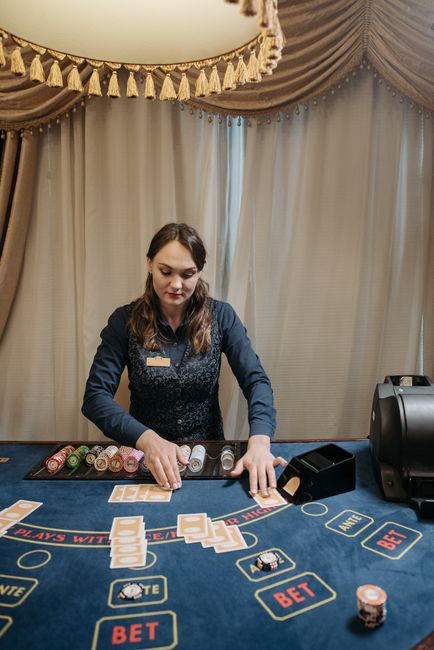
Ask ten people why they play casino games and you'll get ten different answers. The thrill of a spinning reel, the quiet tension of a poker table, the sweat on a last-minute accumulator — each format scratches a different itch. But underneath all of them sits the same uncomfortable question: is any of this actually beatable, or are we all just paying for entertainment with a lottery ticket attached? The honest answer is more interesting than either the cynics or the dream-sellers will admit.
Let's break down what's really happening in iGaming right now, from the math that governs slots to the psychology that governs you, and where genuine edges — however modest — actually exist.
Slots: The Most Misunderstood Product in iGaming
Slots get dismissed as pure luck, and technically that's true of every individual spin. But there's real structure worth understanding. Every slot has an RTP (return to player) percentage — typically between 92% and 97% online — and a volatility profile. A 96% RTP game returns 96 euros for every 100 staked over millions of spins. Your session is a tiny, noisy sample of that number.
What most players ignore is volatility, which matters far more day-to-day than RTP. Low-volatility slots like Starburst pay small amounts frequently, stretching your bankroll but capping upside. High-volatility monsters like Money Train or San Quentin can swallow 400 spins before a bonus lands — then pay 5,000x. Neither is 'better.' They simply suit different bankrolls and temperaments. mahjong slot offers a practical breakdown of the topic.
- Bankroll rule of thumb: divide your session budget by 200. That's your ideal spin size for a high-volatility slot.
- Check RTP per game, not per provider. The same studio often ships 94% and 96.5% versions to different markets.
- Bonus buy features usually cost 80–120x your stake. The math is identical to grinding — you're just compressing time.
Here's the thing: no strategy changes the house edge on the reels. But knowing your RTP and volatility keeps you from torching a bankroll in twenty minutes and calling it bad luck.
Poker: Where Skill Actually Pays the Bills
Poker is the exception in this whole ecosystem. It's the one game where a skilled player can sustain a long-term win rate, because you're not playing against the house — you're playing against other people, and the house just takes a rake. That single structural difference changes everything.
A competent cash-game player at micro stakes might win 3–5 big blinds per 100 hands. At 5c/10c, that's 5 to 10 times 10 cents per hundred hands — thin, but real. Move to 50c/$1 and the same win rate becomes a genuine side income. The rake, though, is brutal at low stakes: often 5% capped at $3, which can eat 10–15 big blinds per hour in a fast six-max game.
What separates winners from losers isn't bluffing like a movie character. It's fundamentals:
- Position discipline. Play tight from early seats, open wide from the button. This alone fixes half of a beginner's leaks.
- Range thinking. Stop asking 'what do I have?' and start asking 'what does my opponent's entire range look like here?'
- Bankroll management. Thirty buy-ins minimum for cash games, fifty for tournaments. Getting felted should never mean quitting for the month.
- Volume with review. Ten thousand hands tracked in a database teaches you more than a hundred YouTube videos.
Poker rewards patience and emotional control above raw talent. Tilt — playing angry after a bad beat — destroys more win rates than any opponent ever will.
Sports Betting: Margins, Markets, and the Myth of the Sure Thing
Sportsbooks bury their profit in the margin, the gap between the two sides of a market. A fair coin flip pays even money; a book prices it at 1.91 each side, keeping roughly 4.5% in the middle. Beating that number consistently is the entire game.
So how do sharp bettors survive? They hunt for value, line shopping across multiple books, and they specialize.
- Line shopping: Two books offering 1.95 and 2.05 on the same team is a massive swing over hundreds of bets.
- Closing line value: If you consistently beat the final odds before kickoff, you're probably profitable long-term — even when individual bets lose.
- Bonuses and promos: Free bets, odds boosts, and matched-bet arbitrage are the closest thing to guaranteed money in sports betting. Grinders treat these as a legitimate income stream.
The trap is accumulator betting. A ten-leg parlay multiplies your odds beautifully and your probability disastrously. Books love them for a reason — the margin compounds with each leg, and few customers ever price that correctly.
Blackjack, Baccarat, and the Games of Near-Skill
Blackjack sits in a strange middle ground. Basic strategy — a chart telling you exactly when to hit, stand, double, or split — trims the house edge to roughly 0.5%. That's better than almost anything else in a casino, but it still isn't a winning game unless you're counting cards, and counting in online live-dealer games is practically impossible due to constant shuffling.
Baccarat, meanwhile, is almost pure chance with one of the lowest house edges in the building: banker bets carry roughly a 1.06% edge, player bets about 1.24%, and ties — at 14.4% — are a sucker's wager that never deserves your money.
Both games tempt players with betting systems: Martingale, Fibonacci, D'Alembert. They don't work, and it's not really up for debate. No progression changes the expected value of a negative-edge game; it only reshapes the distribution of outcomes. Martingale doesn't beat the house — it just makes catastrophic ruin less frequent and far more devastating.
The Part Nobody Talks About: Volume, Bonuses, and Your Real Edge
Here's a genuinely useful insight people miss: for legacy online casino players, the bonus structure is often more valuable than the game itself. Welcome packages, reload promos, cashback, and loyalty points can effectively shift RTP by 1–2 percentage points. On a 96% slot, that meaningfully extends playtime and reduces the real cost of your entertainment.
But it comes with strings. Wagering requirements — often 30x the bonus — mean you'll rarely withdraw before losing to variance. Read the fine print. Prioritize low-wagering bonuses, game-contribution percentages (some slots contribute only 10% to clearing), and time limits. A 'free' bonus is only free if the terms don't guarantee you'll bleed back more than you gained.
Final Thought: Play the Long Game, Not the Highlight Reel
The defining skill in iGaming isn't reading a board or predicting a card. It's understanding that every format sits somewhere on a spectrum from pure entertainment to genuine edge, and being honest about which one you're engaging with. Slots are a product with a fixed cost, poker is a marketplace, sports betting is a probability hunt, and most casino table games are elegant traps.
Play within your means, study the math before the psychology, treat bonuses as strategy rather than free money, and never forget that the house doesn't need to cheat — it just needs you to keep playing. The players who last are the ones who respect that reality and adjust accordingly. If you do, iGaming stops being a coin toss against your own wallet and becomes exactly what it should be: a calculated, informed, occasionally profitable form of entertainment.